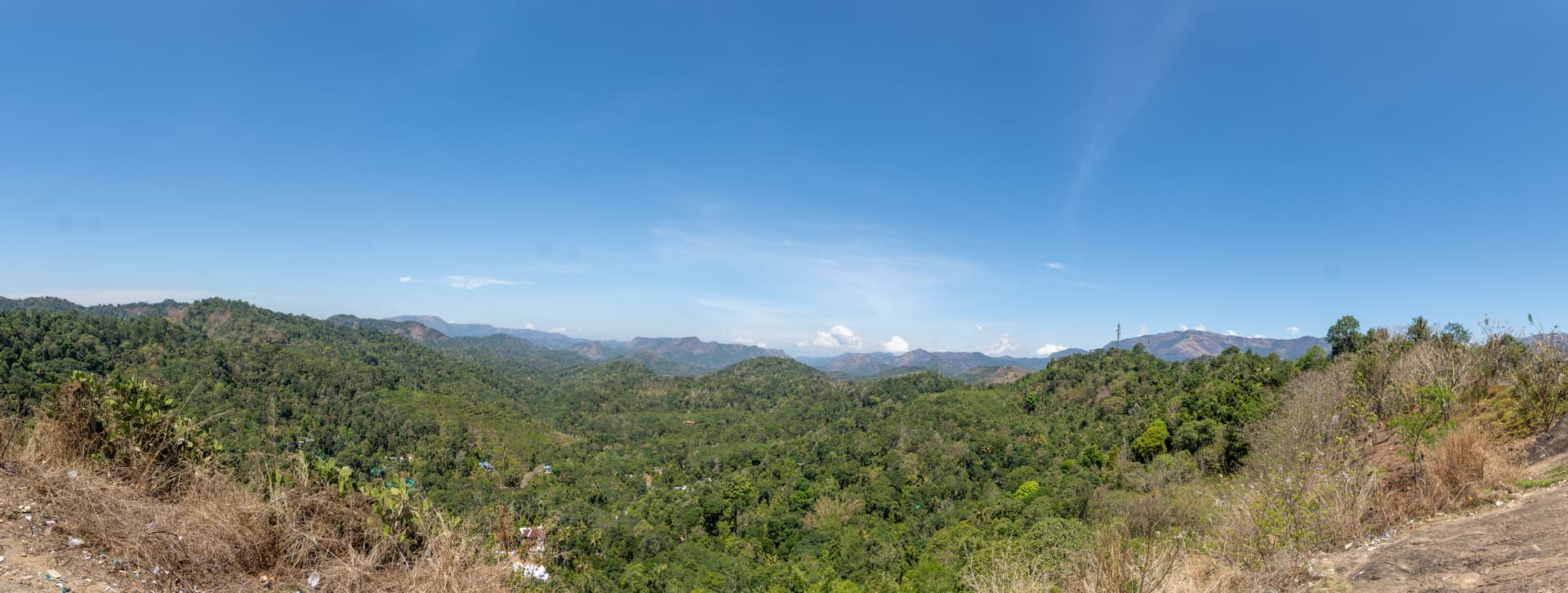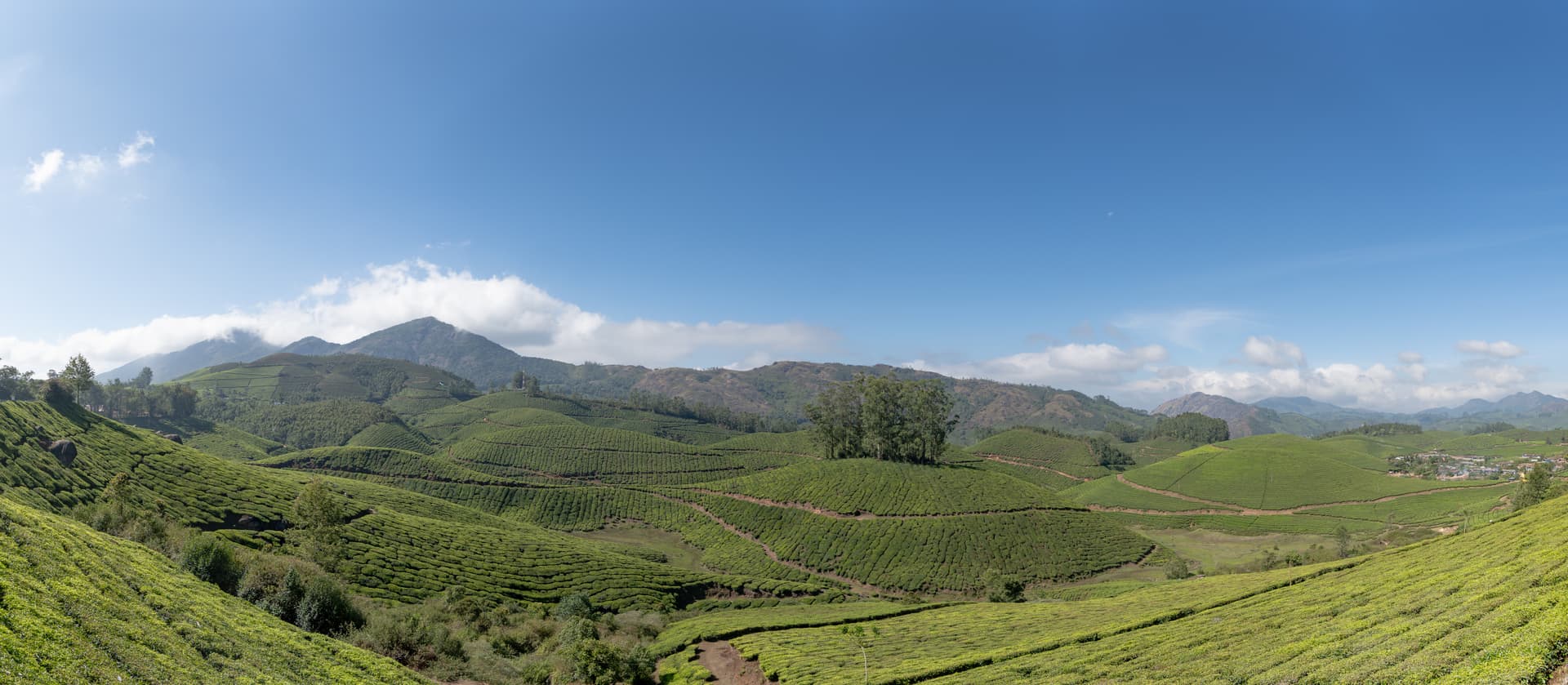
Idukki is big, steep and slow to cross — more than 4,000 km² of mountains with only a handful of main roads. The key to a good trip is not trying to see all of it. This guide covers the essentials: how the district fits together, how long to stay, where to base yourself, what to eat and buy, and the practical details that make the difference.
Idukki at a glance
| Fact | Details |
|---|---|
| Location | Western Ghats of central Kerala, India; borders Tamil Nadu to the east |
| District formed | 26 January 1972; headquarters at Painavu |
| Size | More than 4,300 km² — one of Kerala’s two largest districts, about half of it forest |
| Highest point | Anamudi, 2,695 m — the highest peak in India south of the Himalaya |
| Main bases | Munnar (≈1,500 m), Thekkady / Kumily (≈900 m), Vagamon (≈1,100 m) |
| Languages | Malayalam; Tamil is widely spoken in the estates and near the border; English and Hindi in tourism |
| Known for | Tea, cardamom and pepper, Nilgiri tahr, Periyar Tiger Reserve, hydroelectric dams |
| Getting there | By road only: about 4 hours from Kochi or Madurai |
A short history
For most of history these hills were thinly settled forest, home to communities such as the Muthuvan, Mannan, Paliyan and Urali, who are still here. The spices that grew wild on the slopes — pepper and cardamom above all — were carried down to the ports of the Malabar Coast and traded across the Indian Ocean for two thousand years.
The modern landscape dates from the late nineteenth century. In 1877 the British planter John Daniel Munro leased the Kannan Devan hills around Munnar from the local ruling family, and within a few years they were being cleared for cinchona, coffee and then tea. In 1895 the Mullaperiyar Dam created Periyar Lake. In the twentieth century settlers from the Kerala lowlands moved up to farm, and from the 1960s the state built the great hydroelectric projects — Idukki, Cheruthoni, Kulamavu — that give the district much of its identity. Idukki became a separate district on 26 January 1972.
How many days do you need?
- Two to three days: choose one base. Munnar for tea and views, or Thekkady for wildlife and spices.
- Four to five days: the classic combination — two or three nights in Munnar, one or two in Thekkady, driving between them through the cardamom hills.
- A week: add a night in Vagamon or Marayoor, a Kolukkumalai sunrise and the Idukki Arch Dam viewpoints.
Where to base yourself
Munnar has by far the most hotels and things to do; stay in the estates outside town for the views. Kumily is the compact, walkable town at the Periyar gate, with spice shops and evening shows. Vagamon is quiet and best for a night or two of doing very little. For detail and hotel picks, see where to stay.
What to see
Start with these four, then explore the full list of places.
 Munnar & the tea high ranges
Munnar
South India’s tea capital
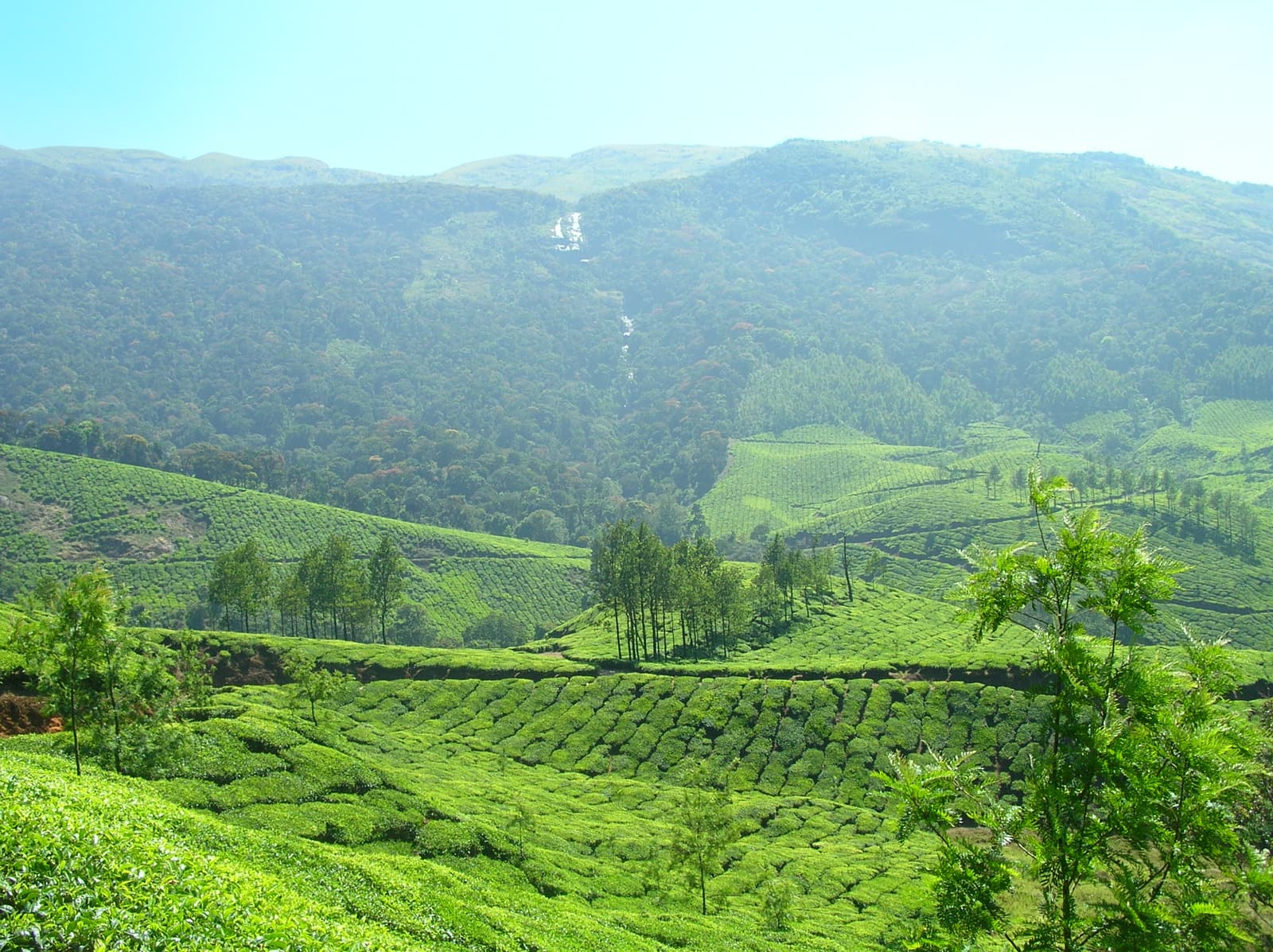
A small market town at around 1,500 m where three mountain streams meet, surrounded on every side by tea estates planted from the 1880s onward. Munnar is the natural base for the high ranges: the tea museum, estate walks, viewpoints, waterfalls and Eravikulam National Park are all within an hour.
 Munnar & the tea high ranges
Eravikulam National Park
Nilgiri tahr and the kurinji hills
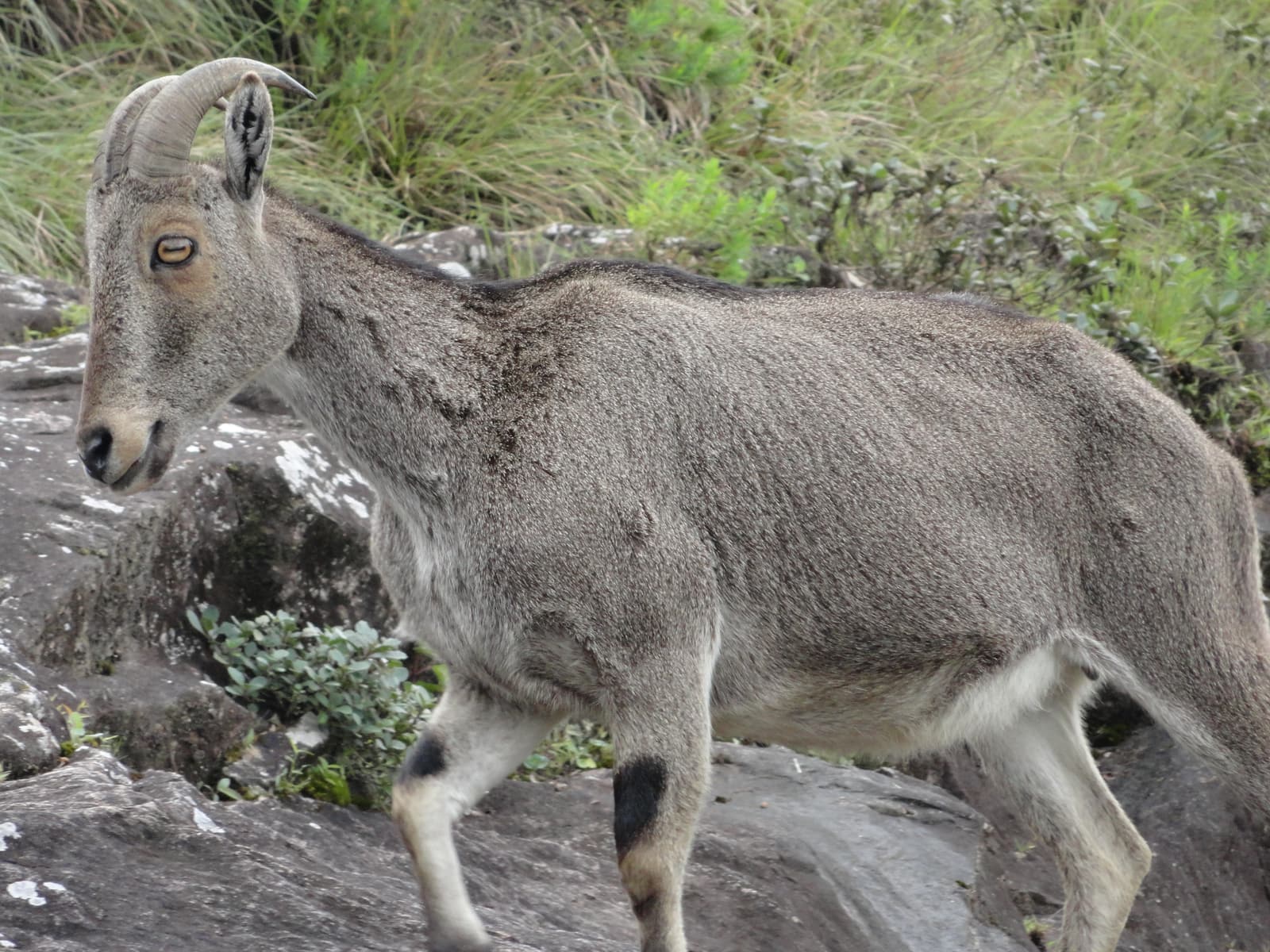
A high plateau of rolling grassland and shola forest north of Munnar, protected for the endangered Nilgiri tahr, which graze within a few metres of visitors in the Rajamalai tourist zone. It is also the most famous place to see the Neelakurinji, the shrub that turns the slopes blue roughly once every twelve years.
 Thekkady & Periyar
Periyar Tiger Reserve
A lake safari in the Cardamom Hills
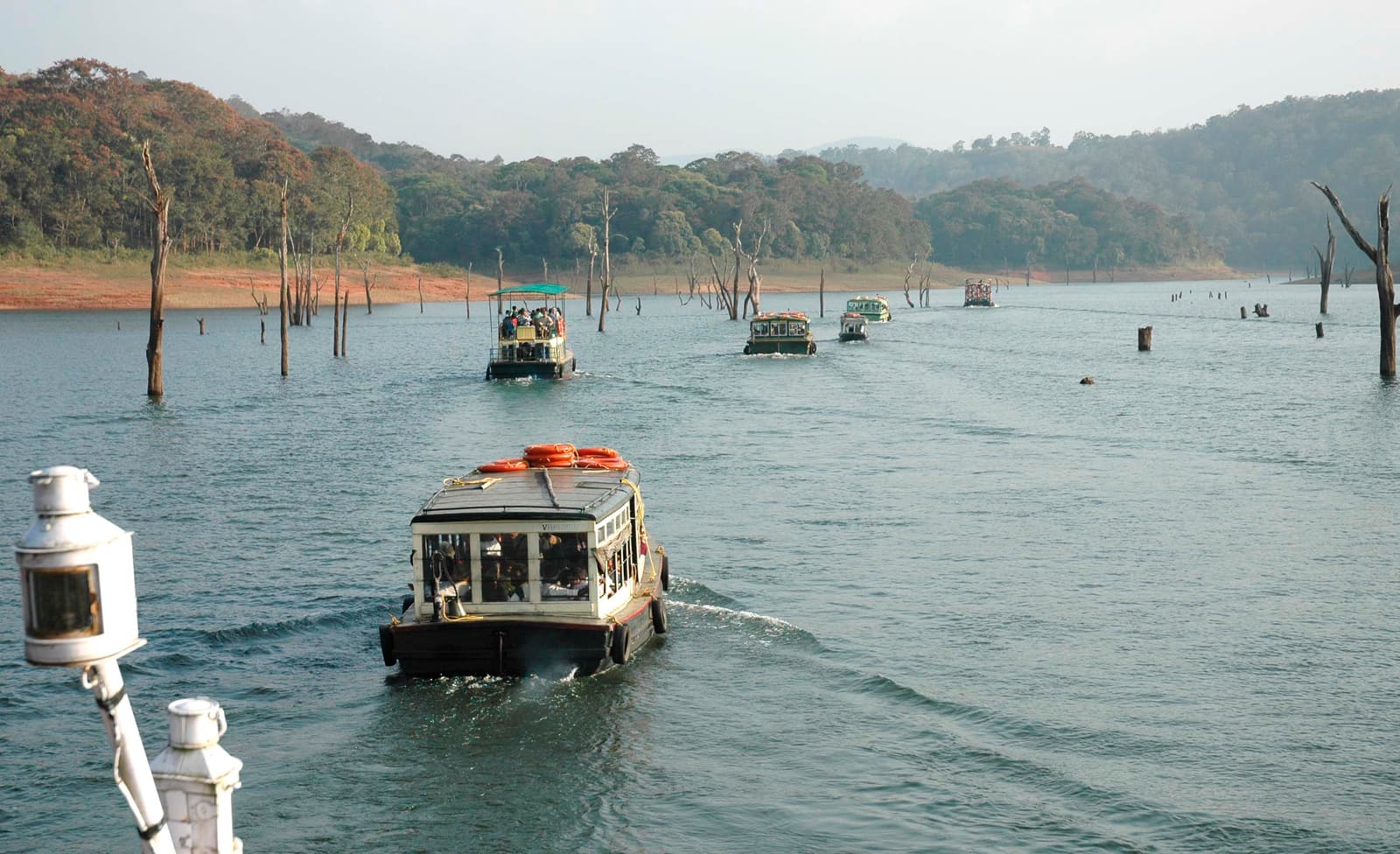
Kerala’s best-known wildlife reserve: more than 900 km² of forest wrapped around a lake created by the Mullaperiyar Dam in 1895. Boat trips from Thekkady look for elephants, gaur, sambar and otters on the shore, and the forest department’s bamboo rafting and guided walks take you deeper in.
 Thekkady & Periyar
Thekkady Spice Plantations
Cardamom, pepper and Kathakali in Kumily
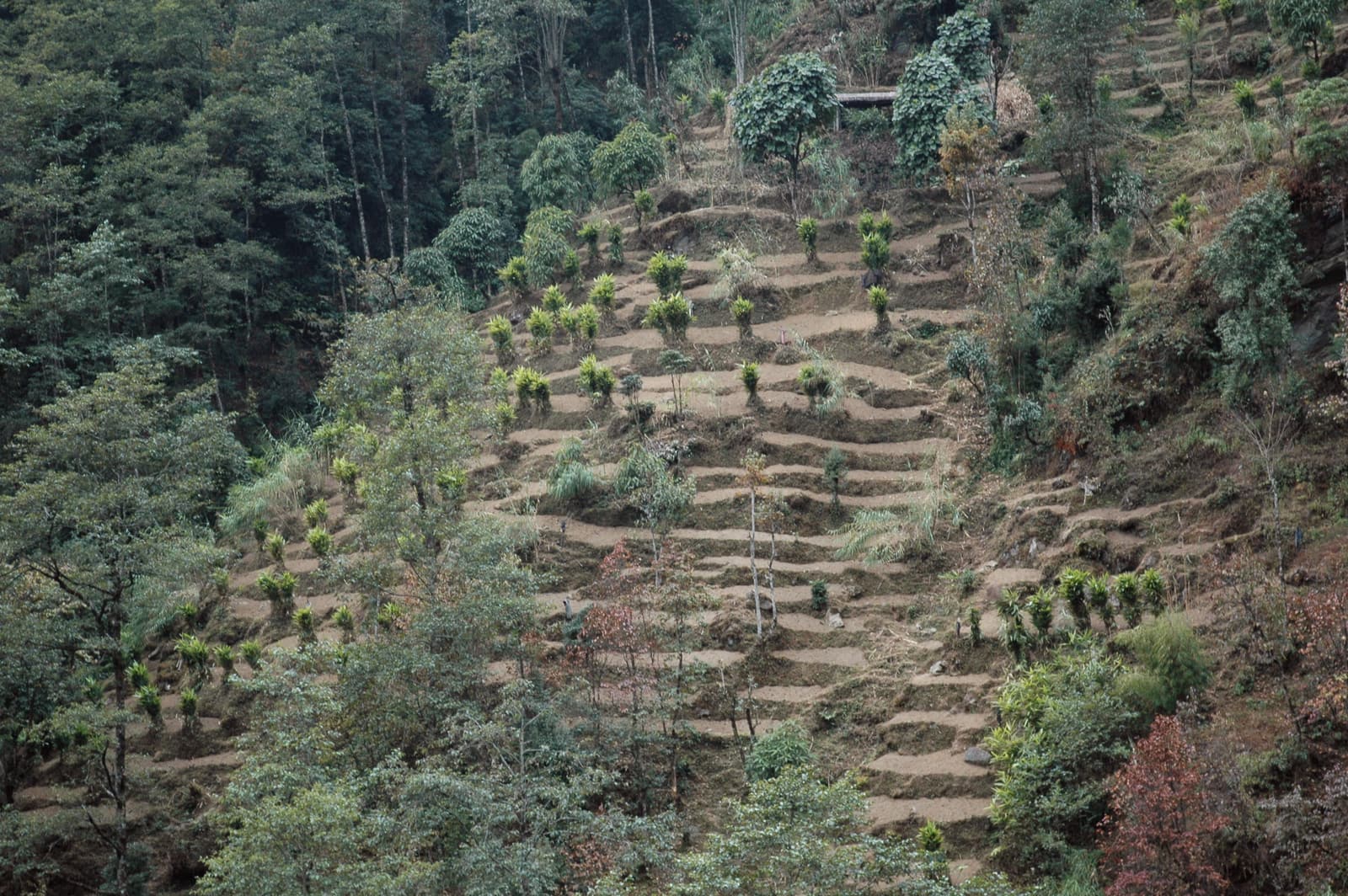
The hills around Kumily, the town at the gate of Periyar, are the heart of Kerala’s cardamom country. Guided plantation walks show how cardamom, pepper, clove, nutmeg, cinnamon, vanilla and coffee actually grow, and the town’s evenings fill with Kathakali and Kalaripayattu shows.
Suggested itineraries
Three days: Munnar only
- Day 1: drive up from Kochi with stops at Cheeyappara and Valara falls; afternoon at the tea museum and in town.
- Day 2: Eravikulam at opening time; afternoon tea trail and factory tour.
- Day 3: early start for Mattupetty, Kundala and Top Station; drive down in the afternoon.
Five days: Munnar and Thekkady
- Days 1–3: as above, staying a third night in Munnar or moving to Chinnakanal for a Kolukkumalai sunrise.
- Day 4: drive to Thekkady via Poopara and Nedumkandam, with a detour to Ramakkalmedu; spice plantation and Kathakali in the evening.
- Day 5: first boat on Periyar Lake; leave for Kochi, the backwaters or Madurai.
Seven days: the whole district
Add a day for Marayoor and Chinnar from Munnar, a full day of bamboo rafting at Periyar, and a final night in Vagamon on the way back to Kochi — or loop past the Idukki Arch Dam and Kalvari Mount.
Food and drink
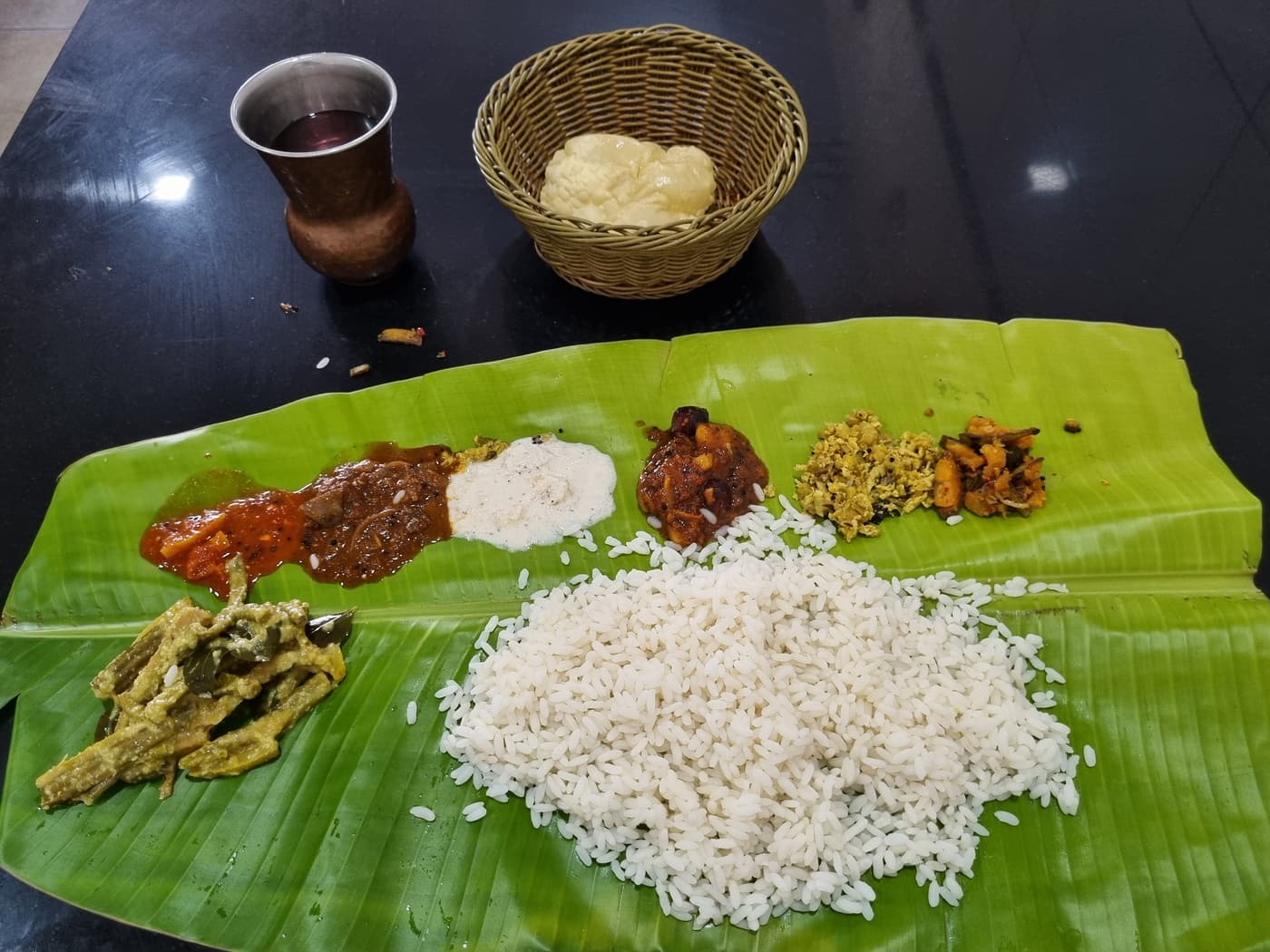
Hill-country cooking in Idukki is hearty Kerala food: rice with fish or vegetable curries, beef fry and porotta, tapioca (kappa) with spicy fish curry, appam with stew, and puttu with chickpea curry at breakfast. Near the Tamil Nadu border you will find dosa, idli and filter coffee as easily as anything else. Vegetarians are well looked after everywhere.
Drink the tea — ask for it black to taste the leaf — and cardamom-scented coffee. Stick to bottled or filtered water. A village cooking class in Munnar is an enjoyable way to learn how the spices are actually used.
What to buy
- Tea: from estate outlets and the tea museum in Munnar — orthodox, CTC, green and white.
- Spices: whole cardamom, pepper, cloves, cinnamon and nutmeg from Kumily.
- Home-made chocolate: sold everywhere in Munnar and Kumily; quality varies, so taste first.
- Marayoor jaggery and Forest Department sandalwood products from the official outlet in Marayoor.
- Honey, coffee and essential oils from forest co-operative shops.
Getting around
The district is best seen with a hired car and driver, booked for the whole trip from Kochi or Madurai or by the day in Munnar and Kumily. Jeeps are used for rough tracks such as Kolukkumalai and for off-road viewpoints. Buses connect all the towns cheaply but slowly. See how to reach Idukki for routes and times.
Tickets, permits and bookings
- Eravikulam National Park: timed entry, limited numbers; book online in busy periods.
- Periyar boats and ecotourism programmes: limited seats; book ahead through the official channels where you can.
- Treks in forest land (Meesapulimala, Chinnar, Periyar) are only allowed with Forest Department guides and bookings.
- Dams: the top of the Idukki and Cheruthoni dams opens only on notified dates.
Fees change regularly and are often different for Indian and foreign visitors, with extra charges for cameras. Check current rates on the day.
Money and connectivity
ATMs are easy to find in Munnar, Kumily, Adimali, Kattappana and Thodupuzha but not in between. Cards and UPI payments are widely accepted in hotels and larger shops; small stalls, jeeps and entry counters often want cash. Mobile coverage is good in towns and patchy in the estates and forest — download offline maps before you set off.
Health and safety
- Roads: winding, narrow and shared with buses. Avoid driving after dark and in heavy rain; carry motion-sickness tablets if you need them.
- Wild elephants use the roads around Munnar, Chinnakanal, Marayoor and Thekkady. Keep your distance, never get out of the car and do not use flash.
- Leeches are common in wet forest and grass from June to November. Wear long socks and carry salt.
- Altitude and cold: Munnar is not high enough for altitude sickness, but nights are cold and the sun is strong.
- Viewpoints: many cliff edges are unfenced. Do not climb out on rocks for a photograph.
- Plastic: single-use plastics are restricted in the protected areas and parts of the hills. Carry a refillable bottle and take your litter with you.
What to pack
- A warm layer and a light rain jacket at any time of year; a proper jacket from December to February.
- Walking shoes with grip — paths are steep and often wet.
- Sun hat, sunscreen and insect repellent.
- Binoculars for Periyar and Eravikulam.
- A small torch, a power bank and some cash in small notes.
- Modest clothing for temples, churches and villages.